
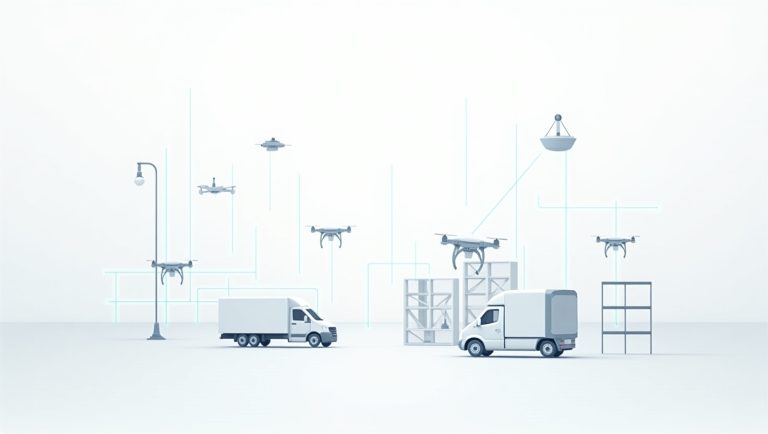
The Internet of Things (IoT) is a crucial element of digital transformation in industry, significantly impacting production and logistics. One of the primary areas of change is warehouse optimization. Intelligent Warehouse Management Systems (WMS) that leverage IoT continuously monitor inventory and automatically generate orders. These systems can also dynamically manage storage space. Thanks to IoT sensors, the precise tracking of item locations is possible, reducing order-picking time and minimizing human errors. Algorithms analyze real-time data to optimize internal transport routes within the warehouse.
Automation of logistics and internal transport processes
IoT in industrial logistics enables the automation of internal transport processes. Manual operations can be eliminated through the use of autonomous transport vehicles such as warehouse robots and automated forklifts. With sensors and cameras mounted on transport equipment, the risk of collisions is minimized, and delivery routes are optimized. IoT also supports forklift fleet management by automating maintenance scheduling, improving energy usage analysis, and increasing overall efficiency. As a result, businesses can reduce operational costs while enhancing safety and the efficiency of logistics operations.
Reduced downtime and increased efficiency
Traditional maintenance methods often lead to unplanned downtime and high repair costs. IoT sensors, which monitor the technical condition of machinery in real time, allow for predictive maintenance. This means potential failures can be forecasted, and servicing can be scheduled at the optimal moment. Advanced data analytics detect irregularities in machine performance, significantly reducing the risk of breakdowns.
IoT in supply chain management
IoT technologies comprehensively optimize warehouse operations and supply chain management. RFID and GPS sensors precisely track the location and condition of shipments at every stage of transportation. Companies can analyze data on temperature, humidity, and other environmental factors—crucial for industries requiring specific storage conditions. IoT enables dynamic delivery management by adjusting schedules and routes in response to real-time market conditions or other external variables.
